AI Revolutionizes Medical Record Review
AI Medical Analysis, Audit Defense, Legal Technology, Chart Review Automation
The Quiet Revolution in Healthcare Legal: How AI Is Rewriting Medical Record Review
Behind the scenes of healthcare compliance and audit defense, a quiet revolution is underway. AI-powered medical record analysis is transforming slow, expensive chart review into a fast, accurate, and defensible engine for modern law firms.
From Binder Stacks to Bottlenecks: The Traditional Model
For decades, healthcare audit defense has depended on armies of nurses, coders, and junior attorneys manually reviewing medical records. Boxes of charts or sprawling PDFs are divided into batches, annotated by hand, and summarized in spreadsheets. Every admission, diagnosis, modifier, and time stamp must be checked against payer rules, government regulations, and internal policies.
This traditional model is thorough, but painfully slow and expensive. Human reviewers tire, miss subtle patterns, and struggle to keep pace with constantly evolving regulations. As audit volumes rise and payers deploy more sophisticated analytics, manual review alone has become a structural bottleneck—and a competitive liability for law firms and health systems alike.
The AI Revolution in Medical Record Review
Enter AI Medical Analysis. Advances in natural language processing and machine learning now allow platforms to ingest millions of pages of clinical documentation, EHR exports, and claims data, then surface what matters for Audit Defense in minutes instead of weeks. As industry analysts note, AI has moved from experimental to essential in healthcare operations, particularly where compliance and risk management are at stake (Healthcare IT News; Forbes Tech Council, 2023).
These systems recognize clinical concepts, coding patterns, and temporal relationships across an entire chart. They flag potential upcoding or undercoding, uncover missing documentation, and highlight inconsistencies that could trigger recoupments or penalties. Rather than replacing legal judgment, AI becomes a force multiplier—triaging records, prioritizing risk, and presenting attorneys with structured, defensible insights.
Cost Transformation: Cutting Review Costs by Up to 85%
One of the most striking impacts of Chart Review Automation is cost. By automating routine data extraction, cross-referencing, and issue-spotting, AI tools can reduce the human hours required for a large audit file by as much as 85%. Research on AI in medical record management shows that automation slashes administrative overhead and minimizes errors that lead to costly denials and rework (HealthIT.gov; Healthcare IT News).
For law firms, that cost transformation can be channeled into more predictable fee structures, alternative billing models, and higher-margin work. Instead of staffing every matter with a large review team, firms can combine a lean group of subject-matter experts with an AI platform that handles the heavy lifting at scale. Clients see lower invoices without sacrificing the rigor required for high-stakes healthcare compliance defense.
Quality Versus Speed: Why AI Delivers Both
In traditional workflows, speed and quality often trade off against each other. Rushing a review increases the risk of missed issues; slowing down drives up costs and jeopardizes deadlines. AI changes this equation. Algorithms can review every page of a chart consistently, 24/7, without fatigue. They surface anomalies that even experienced reviewers might overlook, while creating a clear audit trail of how each conclusion was reached—a growing requirement as regulators focus on explainable AI and defensible processes.
Human experts still validate AI findings, exercise legal judgment, and craft strategy. But instead of spending 80% of their time searching for needles in haystacks, they spend that time interpreting patterns, preparing arguments, and advising clients. Quality improves precisely because the human effort is redirected to the highest-value work.
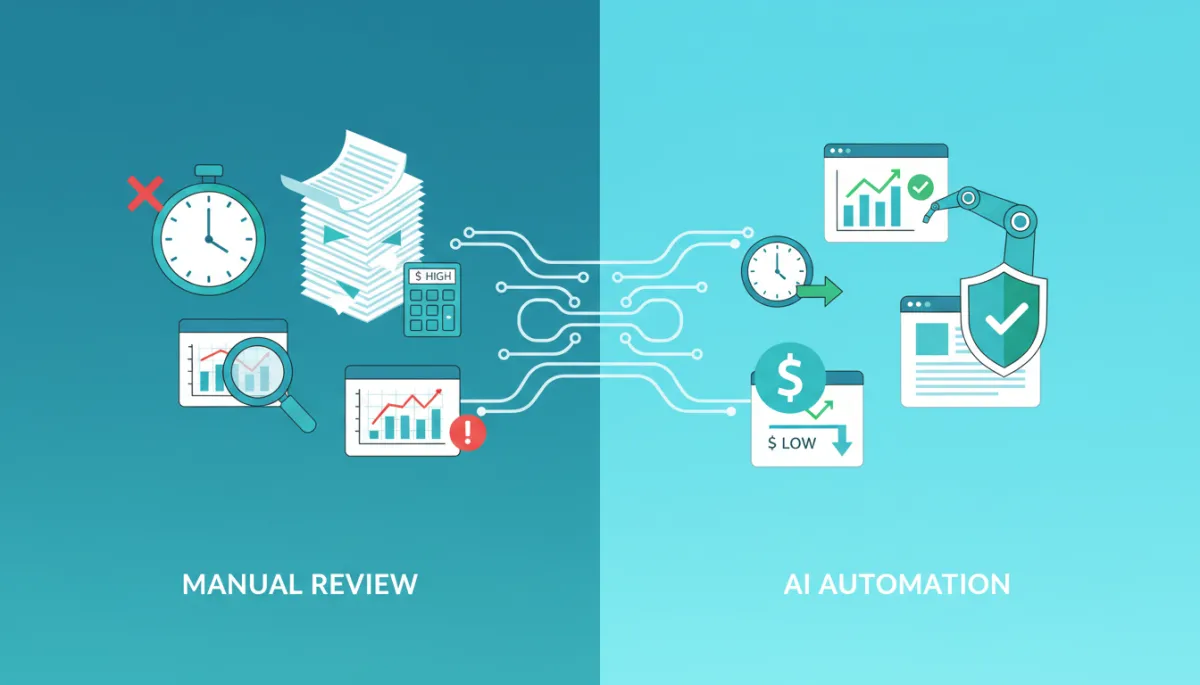
AI-driven chart review can cut costs by up to 85% while improving issue detection.
Competitive Advantages for Forward-Looking Law Firms
In a 2026 legal technology landscape where AI is increasingly embedded in everyday workflows, firms that embrace AI Medical Analysis gain a distinct edge. They can respond faster to payer demands, handle larger audit volumes without proportional headcount, and offer richer analytics about risk trends across a client’s portfolio of claims or facilities. Unified cloud-based Legal Technology platforms make it possible to integrate chart review outputs directly into matter management, document automation, and reporting dashboards.
This advantage is not just operational; it is strategic. Firms that demonstrate mastery of AI-enhanced Audit Defense signal to regulators, payers, and health systems that they can navigate complex data environments, evolving privacy laws, and emerging AI governance expectations with confidence.
Client Perspectives: What Healthcare Organizations Now Expect
Health systems, physician groups, and payers themselves are under intense pressure to reduce administrative costs while meeting stricter interoperability and privacy mandates. Many are already deploying AI for internal compliance monitoring and Security Risk Analyses. As a result, they increasingly expect their outside counsel to bring similar or better capabilities to the table.
Clients want more than legal memos; they want dashboards, benchmarks, and predictive insights. They ask: How does our denial risk compare to peers? Which service lines are most vulnerable? Where can we remediate documentation practices before the next audit hits? Law firms that pair legal expertise with AI-powered Chart Review Automation are best positioned to answer these questions with data, not anecdotes.
Implementation Considerations: Building a Defensible AI Program
Adopting AI for medical record review is not a plug-and-play decision. Firms must evaluate vendors for data security, HIPAA compliance, and alignment with emerging AI governance frameworks. Questions to ask include:
How is protected health information encrypted, stored, and accessed?
Can the AI’s findings be explained and documented for regulators, courts, and opposing counsel?
How are models trained, updated, and validated against real-world audit outcomes?
What role do attorneys, nurses, and coders play in reviewing and overriding AI recommendations?
Successful implementations treat AI as a component of a broader compliance ecosystem, integrating with existing EHR exports, matter systems, and document repositories. They also invest in training lawyers and staff to interpret AI outputs and maintain appropriate skepticism—aligning with the industry’s emphasis on human–AI augmentation rather than replacement.
The Future of Healthcare Compliance Defense
Looking ahead, healthcare compliance defense will be shaped by converging trends: tighter privacy rules, interoperable data standards, AI-specific regulation, and growing expectations for continuous risk monitoring. Regulators are already piloting models that tie reimbursement to demonstrable outcomes and trustworthy technology use. At the same time, cybersecurity and data governance requirements are intensifying, with AI-powered tools helping organizations keep pace.
In this environment, AI-enabled Audit Defense will become the norm rather than the exception. Law firms that invest now in robust, explainable AI Medical Analysis and Chart Review Automation will not only defend audits more efficiently; they will help shape the standards of what “reasonable,” “diligent,” and “defensible” look like in a data-driven healthcare system. The quiet revolution is already here—and the firms that listen closely, and act decisively, will lead it.